As a PhD Student in the Humanities and research creation program at Concordia University (Montreal), Laura is exploring the possibilities of developing augmented materials and methodologies toward expanded performances.
She is working with various generative material and digital processes in order to explore the possibilities of producing mixed reality textiles that can be used for performance creation. Through this creative process she seeks to better understand the generative nature of processes of dislocation in diasporic experiences. This research explores themes of new materialism and critical posthumanism from a feminist, queer and decolonial perspective.
Through this creative research she aims to explore textiles as more than material practices and rather as conceptual frameworks to understand the how the body acts as an embodied and embedded texture within physical, virtual and social structures.
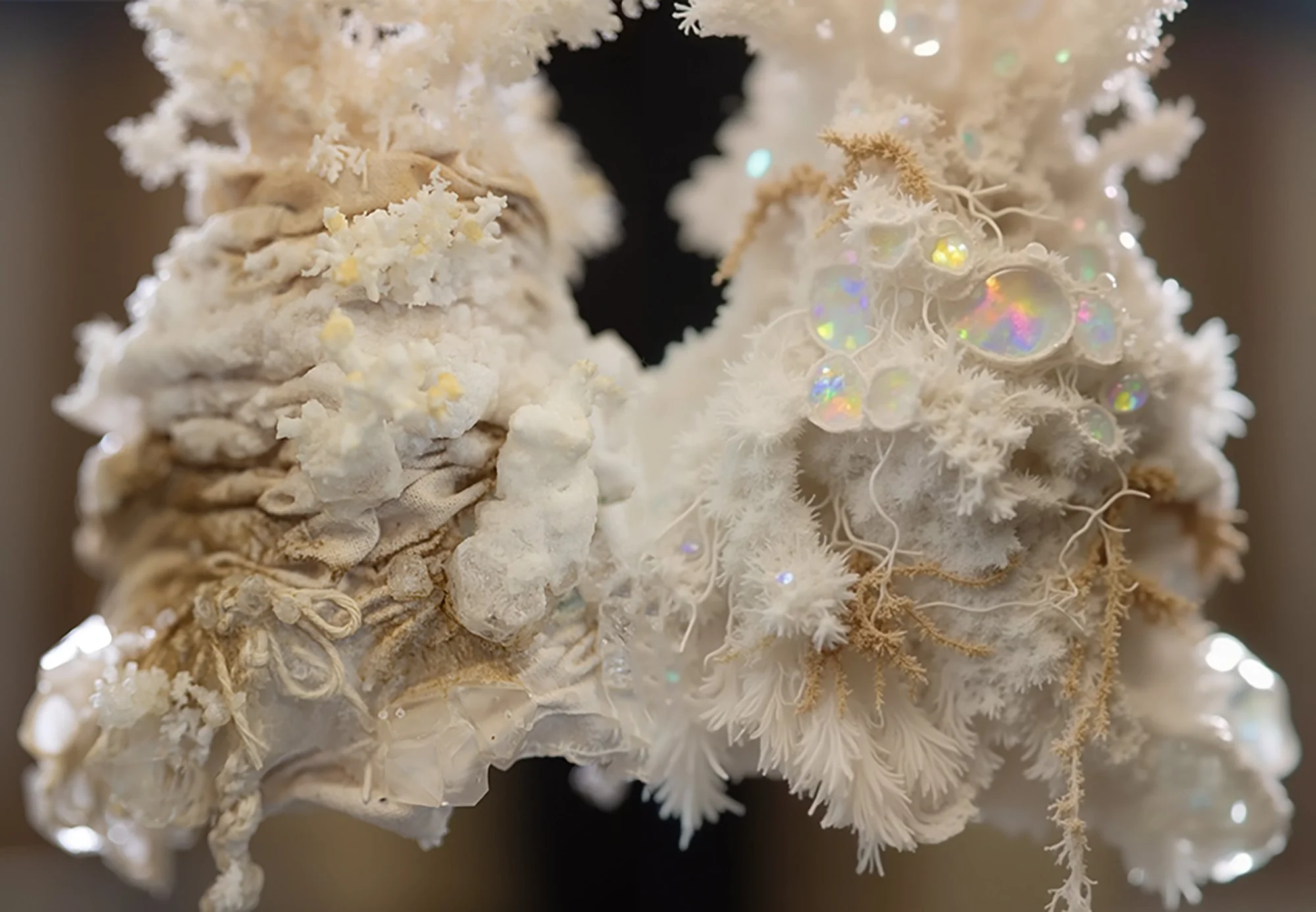
In the early stages of this work she has produced textile sculptures through embroidery and smocking techniques which have become the base for crystallization processes with alum sulfate. Experimenting with various Artificial Intelligence programs, such as ComfyUI and Autolume, these forms have been digitally manipulated through different generative processes to explore how material surfaces can be transformed and expanded virtually. Thus creating visual compositions that exist between the possible and the real.
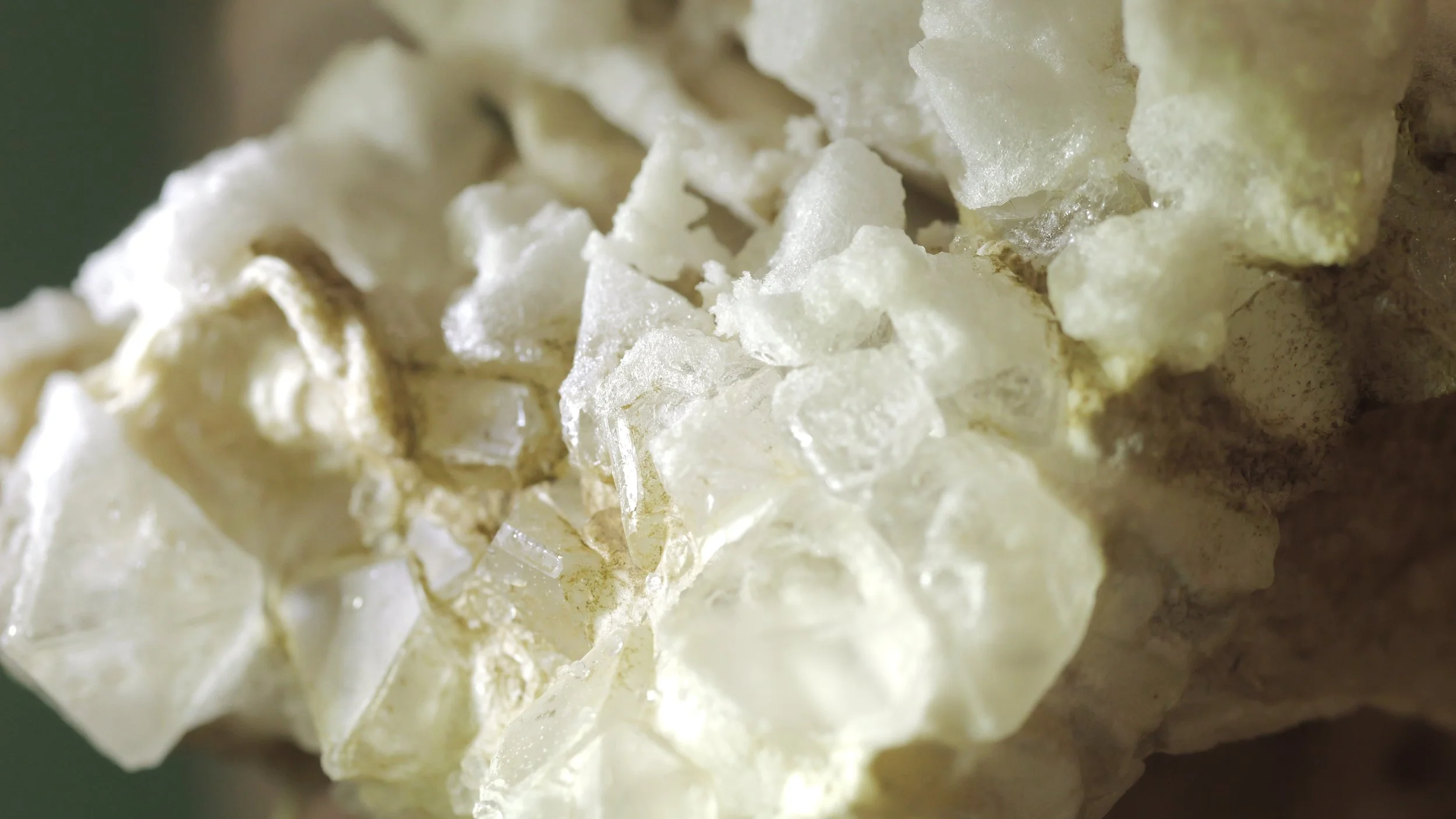
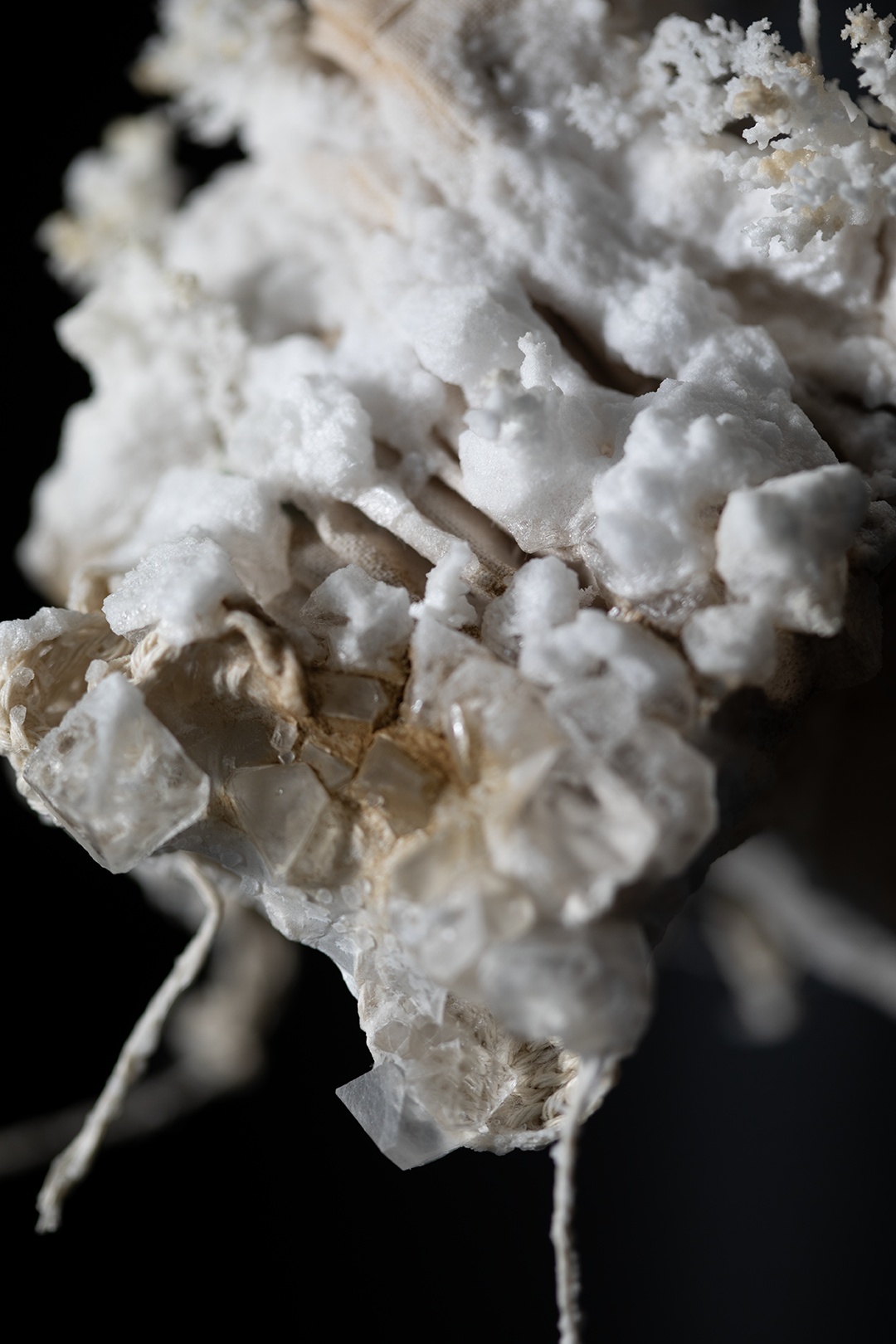
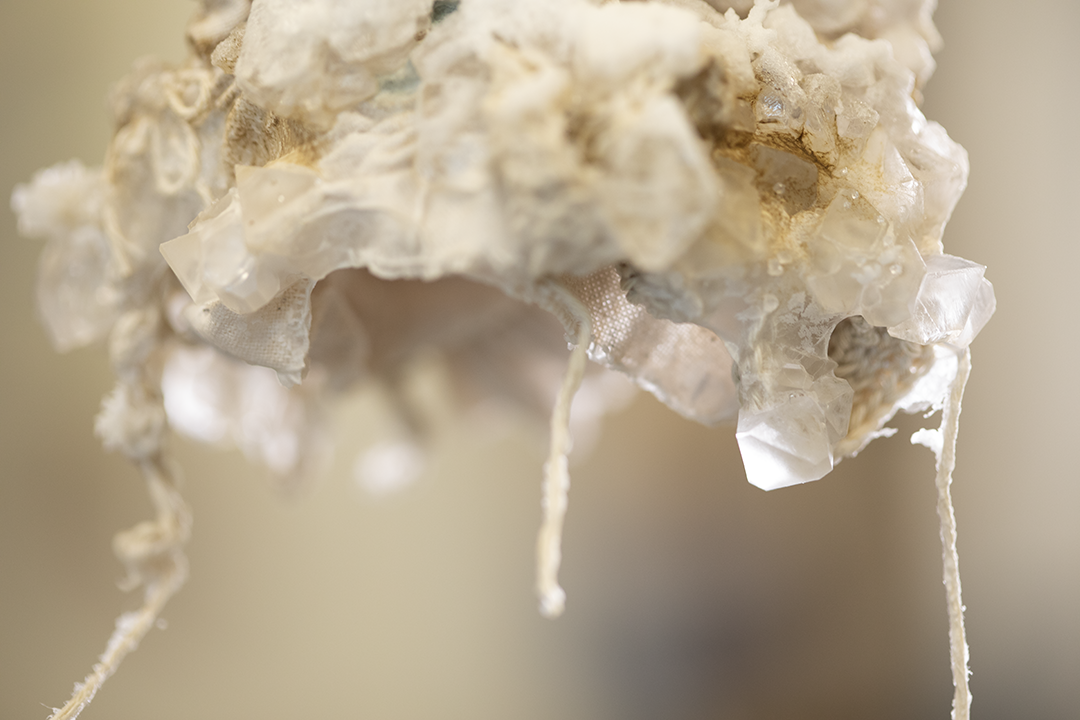
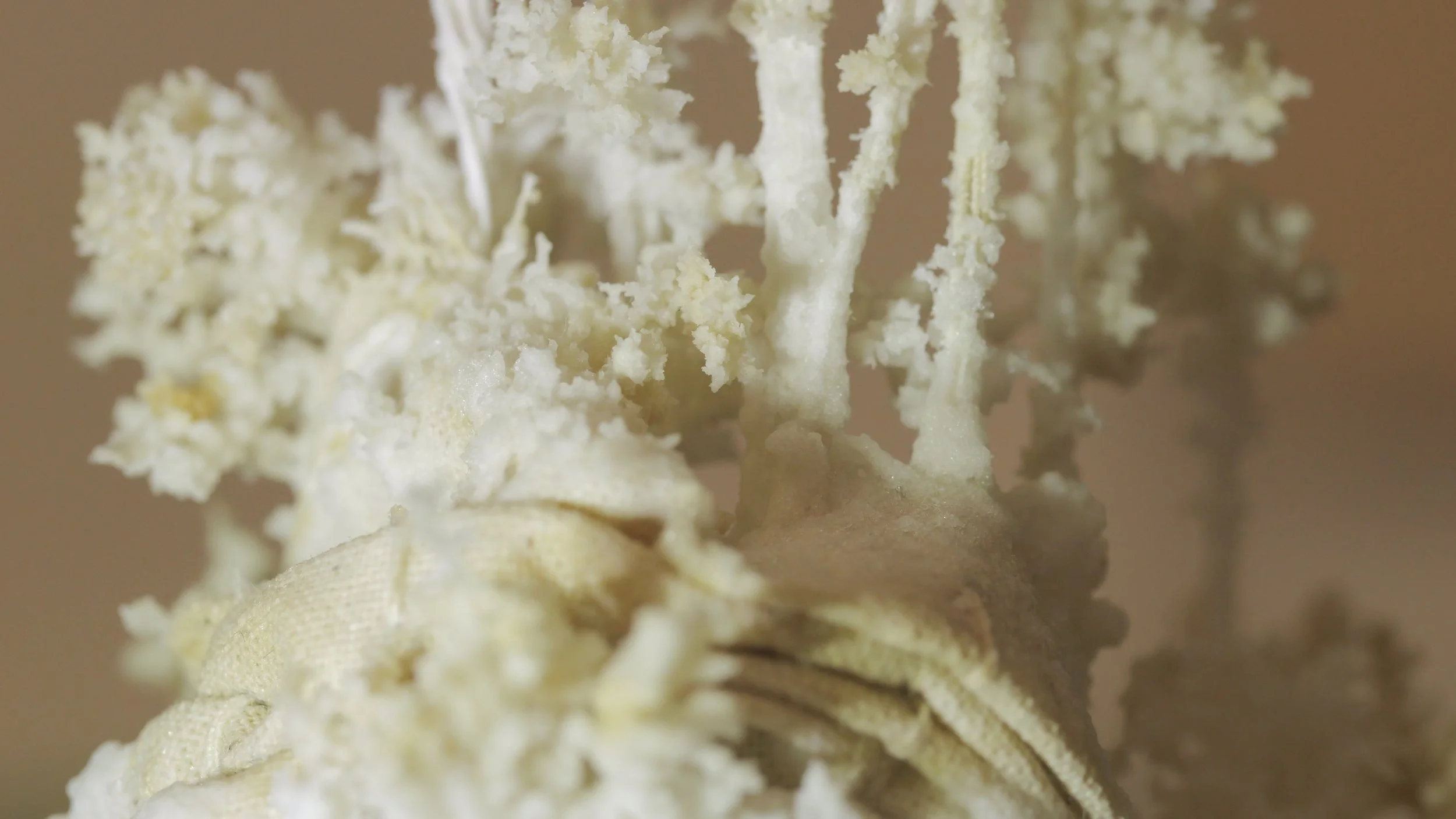
Experiments training an AI GAN model with images of the crystalized textiles.
Experiments with text-guided AI workflows and diffusion models.
Transmogrifications, Collaboration with Léo Chédin during the Choreographic Coding Lab residency at the Royal Ballet and Opera during the SHIFT Festival, London, UK (May 30-June 7, 2026)
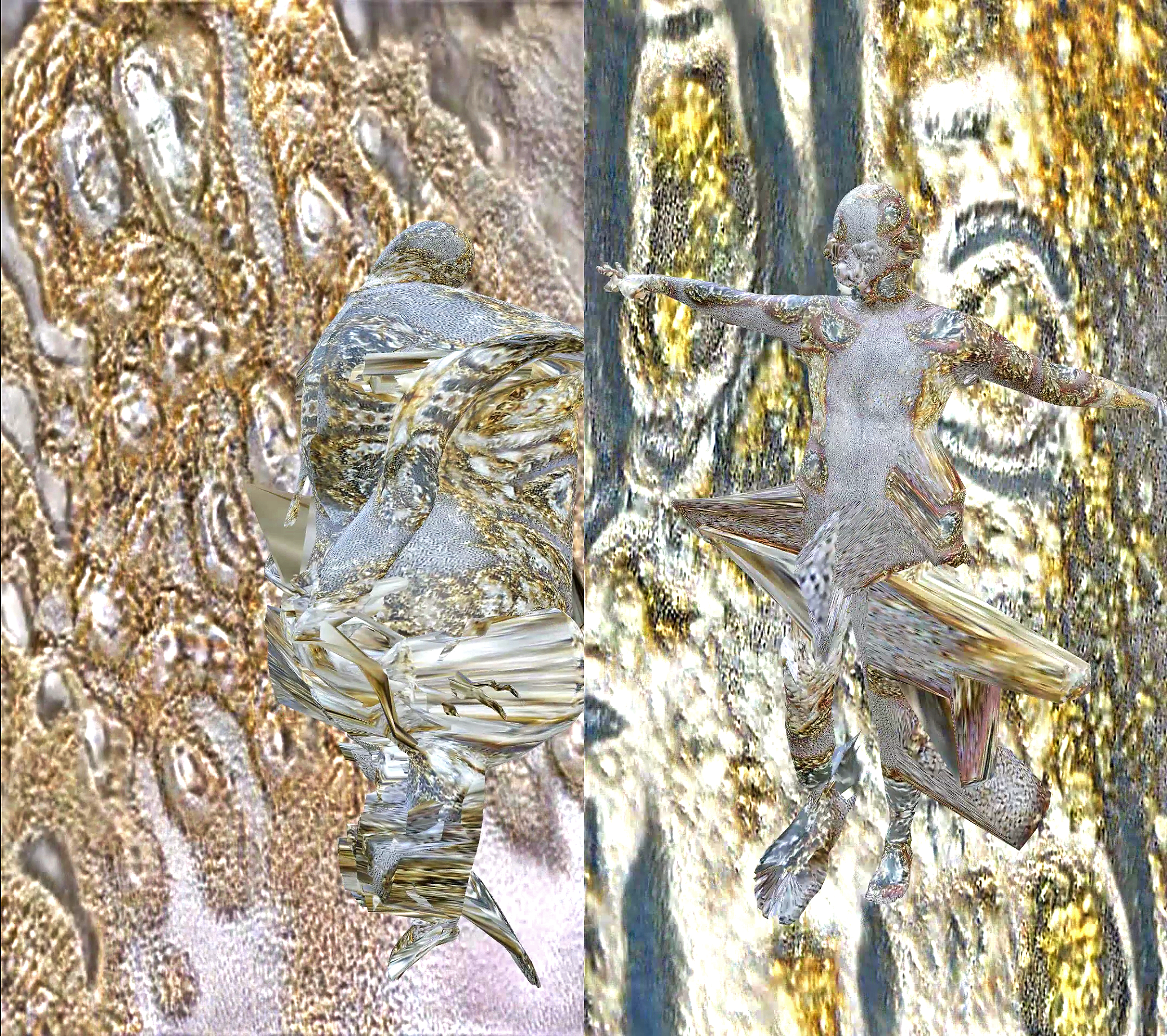
This lab invited artists working across AI and performance creation to engage with the Royal Ballet and Opera departments and experiment on creating new work. During the 10-day residency, I trained an AI GAN model on images of surfaces of selected RBO costume pieces. The resulting digital textures were then used as skins and backgrounds for glitched 3D avatars, programmed to move with motion data previously captured from a live dancer.
Video with virtual textures and avatars in different environments.
A dataset was created with closeup photographs of the surfaces of various costume pieces to train a GAN model and produce a virtual texture.
Another inquiry into virtual textiles has also led to the production of sculptural wearable pieces being rendered digitally through prompt-based AI programs.